Feeding Our Family and Meal Planning – What works for us.

Over the last few years when I have talked about our meal planning and shopping or the way that we eat as a (fairly) big family and on a budget people look at me like I’m a teensy bit crazy.

Um … they’re probably right.

But – then I get a bajillion questions and I feel like I never get to answer them completely.

So here, in one place, I’ve brought it all together.

How we plan and how we approach food and feeding at our place.

Please let me be very clear – I know this won’t work for everyone. But this is what works well for us. There are 6 of us. The biggest ones can EAT. Seriously 😳 My husband works full time and I work two jobs. We both volunteer with our Church and sports. We want to fit in exercise and gardening and then there is allllllll of the stuff that comes with 4  VERY active children! And on top of that – we also have food allergies, fears and sensory issues to deal with, so eating out or grabbing food on the fly doesn’t always work (or suit our budget!).

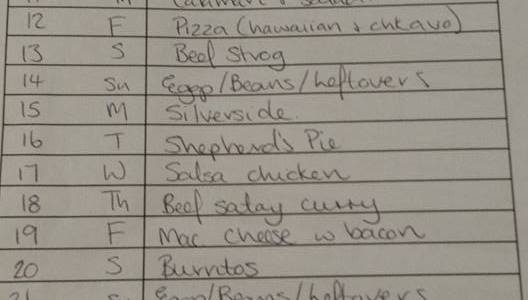
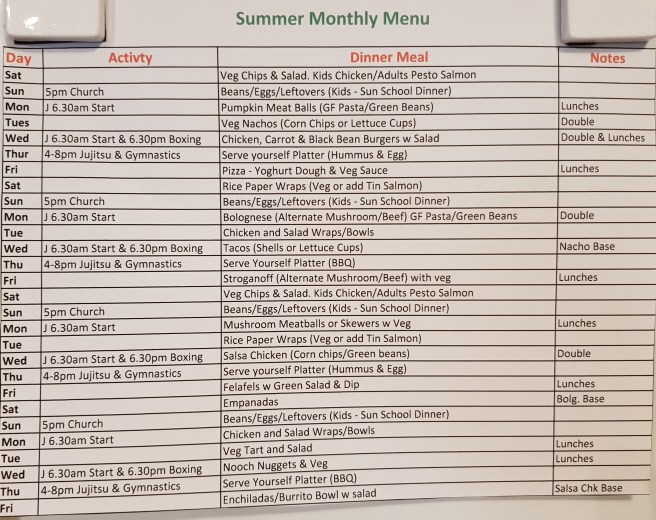
Firstly. I write a menu and do a grocery shop for a fortnight. It looks a bit like this (actually at the moment, it isn’t footy season so it’s missing a weekend game and 2 training sessions!!):
20200217_180538
Our menus change with the season and what is growing locally

You can check out this previous post about how I actually shop and budget.

You don’t feel like the thing on the menu for that night? No worries – There are plenty of other meals to choose from, so switch it up!

I talk to the kids as I’m writing it and we all give ideas as a family about what we like and are enjoying at the moment – they feel included and it helps me out not having to come up with all of the ideas!

It makes sure that it takes into account what activities we have on each day, what our work loads look like and any major things on that month. No good planning a 3 course meal for dinner and then only having 20 minutes at home in between gymnastics and jujitsu to make it!

You’ll see that we have a deliberate plan to eat left-overs (usually Sunday night) so that we reduce any food waste.

How do we eat as a family?

  • We aim to eat a variety of foods, especially plant based foods. Fruit, veg, beans and lentils, nut and seeds, whole grains etc. We try to limit too many ultra processed foods, processing in and of itself isn’t a bad thingIMG_20191017_175142_869
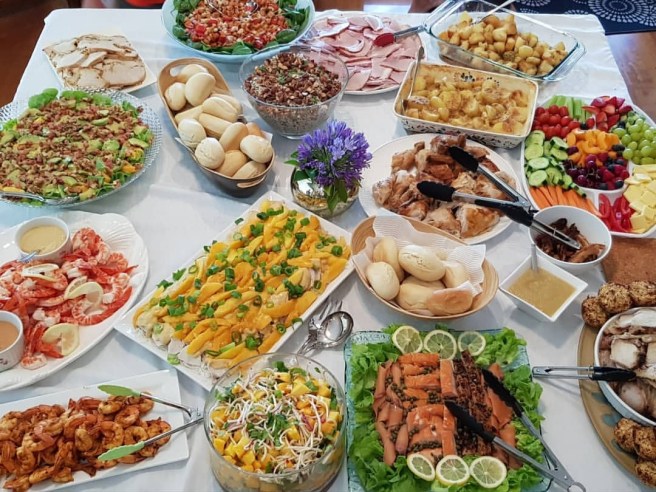
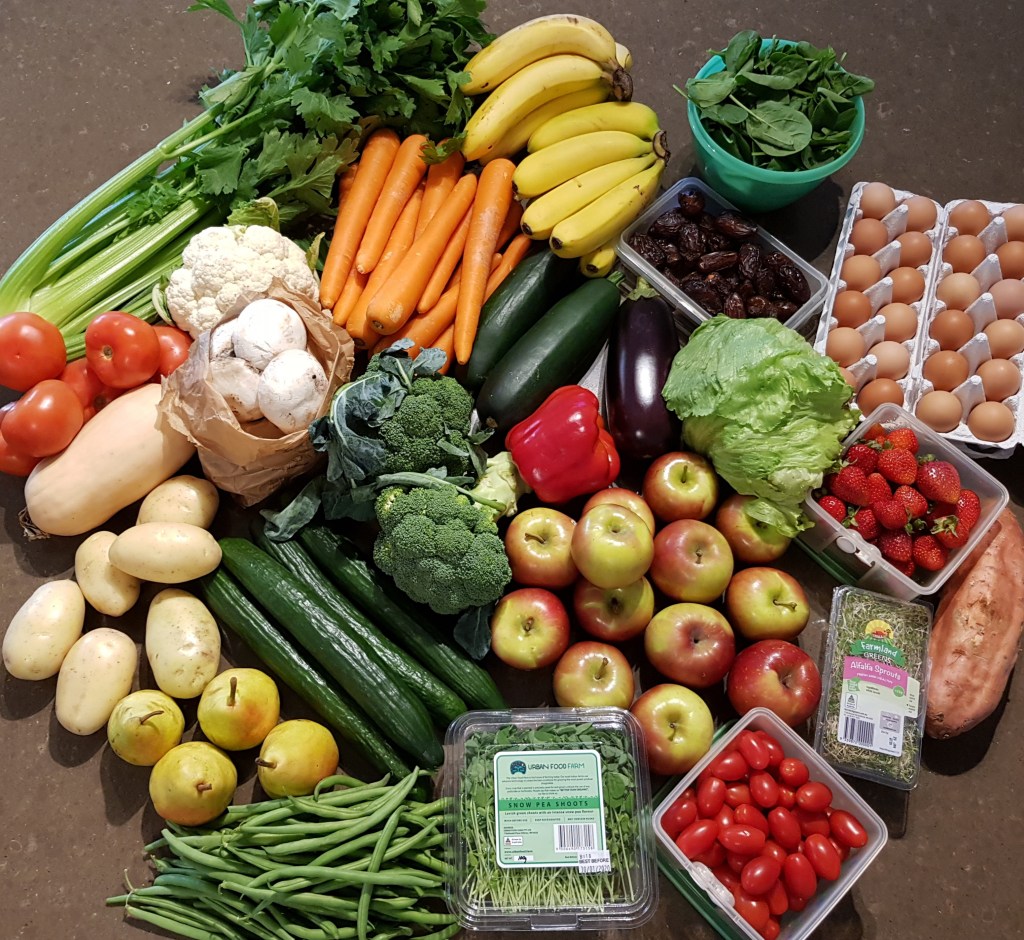
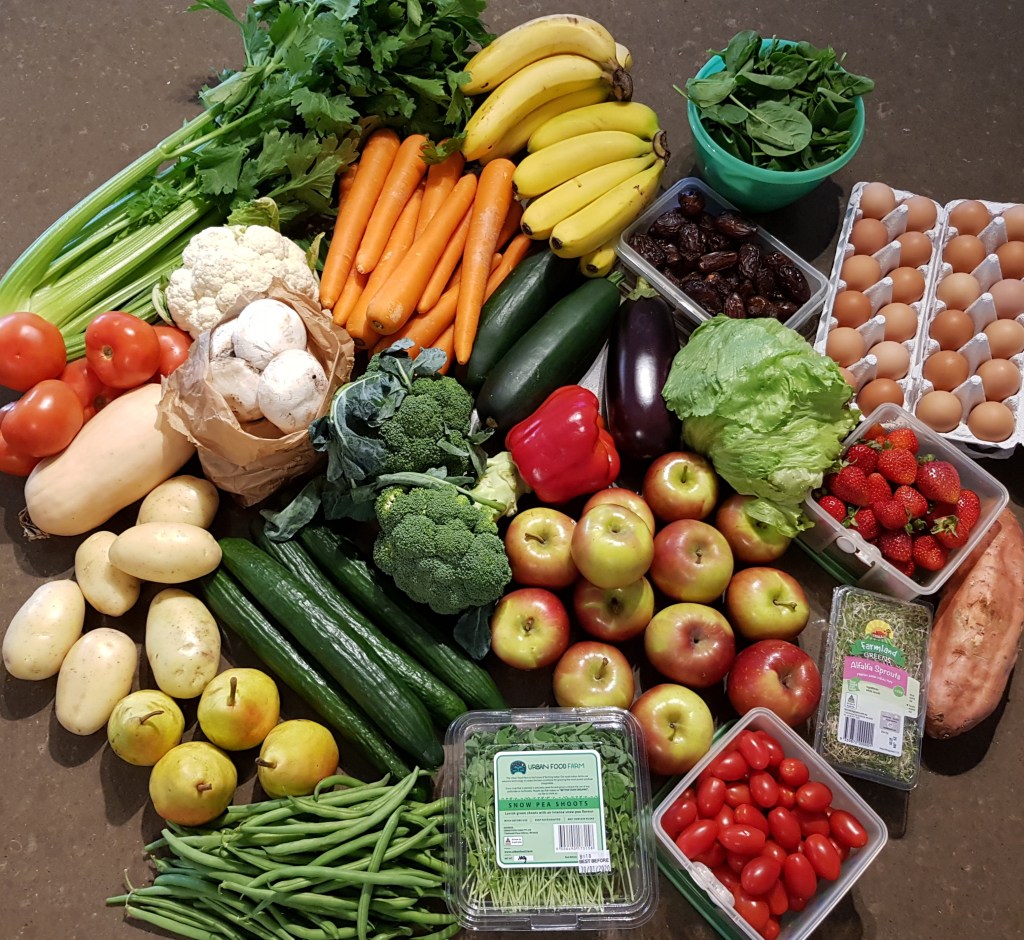
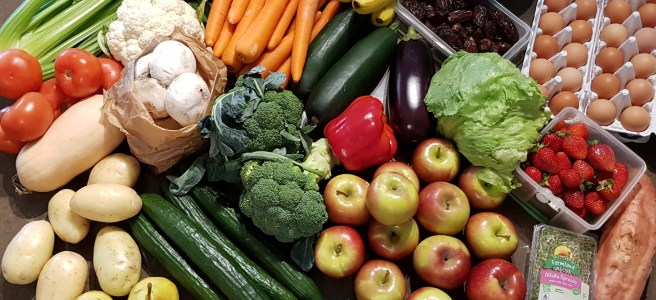
  • We eat a rainbow of natural colour! Lots of variety, fruits, veg and all manner of plants – raw, cooked, mixed in and visible. Make it a challenge to eat the most colours and variety. Don’t forget that frozen fruit and veg and tinned beans etc can be a great, simple, budget friendly option to help you out here.

    20200125_144417
    Choosing variety and colour!
FB_IMG_1582332691089
Literally turning platters into rainbows!
20200201_130322
So many ways to eat green!
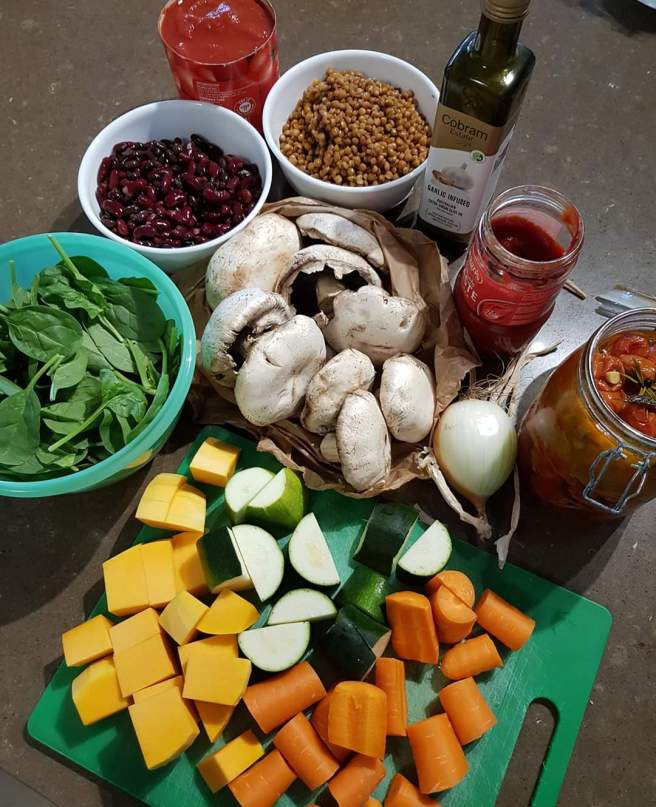
  • When we eat meat we don’t have huge portions and we don’t make it the focus of the meal – more like a side. And we bulk up the  meal with mushrooms, beans and veg as much as possible. It is very easy to get enough protein in the western world, but as a nation we don’t do well at eating enough veg or getting enough fibre (so critical to our health and wellbeing) so this is a good way to encourage it.
    FB_IMG_1582332499682
    Veggie Bolognese – mushroom and lentil style
  • As parents, we are in charge. We make the food decisions in our  house. I absolutely get that this one is controversial. And if you are going to make changes to align with this – it will take time and there will be resistance. And yes, I completely understand that this will change as the children get older (they range from 10 to 16 right now). But, I have a better idea of what their nutritional needs are. If there is food that I don’t want them to eat, I do not buy it. It’s too hard to have it in the house and then have to police it – I’m not creating opportunities for battles when there is no need. For example – I don’t want to them drink milo all the time so we don’t buy it, but it is at Nanna’s house and they have it there each week. It’s not “bad” or out of bounds, it’s just not an all the time thing in our home.
  • We subscribe very much to a ‘We provide, they decide’ approach to eating. You can check out more from Ellyn Satter  about the division of food responsibilities. This does mean that our children have the right to decide if they eat and how much they eat of the meals provided. BUT there are NO alternatives. The family meal is the family meal. This removes pressure and battles from meal time. There is no coercion around food or finishing everything on their plates. We model the food and eating behaviours we want them to share, and over time they learn to trust and listen to their bodies, serve themselves and and make good food choices. We do a lot of placing everything in the middle and letting them serve themselves. Below are rice paper wraps, fish wedges and salad, Mexican wraps/bowls plus nuggets and veg
20200223_090305
They learn to love their food!
  • We are aware of our kids likes/dislike and food preferences around textures (due to ASD and SPD) etc – But that does not mean that we simply stop serving the foods that one of them dislikes. We do talk to them when we’re creating our menu and take their input. Then they know that there is lots of food coming up that they do enjoy. If we are serving a meal that we know is not a favourite, we make sure that there are some things on the plate that they are comfortable with. If we are serving up a new meal (and one I suspect will not be well received!) I make sure that a small portion of it is on the plate (simply having the food near them helps with exposure and familiarity) but kept a bit separate from the other familiar food. Below is when we introduced mushroom stroganoff – all in one for the adults and separately, without pressure for the kids.
  • We encourage our kids to be involved with food, right from growing our veggies and helping with the gardening to helping us to prepare and serve the food.
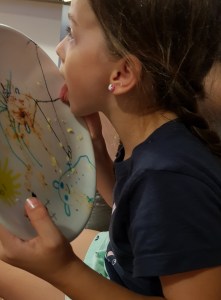
  • We allow and encourage food exploration. Touching, poking, licking, sniffing … all fine (at our home dinner table!). Also we talk about our food in a way that removes pressure: What colour it is? Does it crunch or squish when you bite it? It is different cooked to raw? Could you make you name with it or make a face?
20200223_090251
Mum! Listen to this crunch!
20200223_090202
Wonder who is responsible for this one?
  • Food is not ‘good or bad’. It is not a moral choice. We do talk about what food gives us and how it makes us feel – this food will give me lots of protein and help me build up my muscles. This food will give me good energy to get through a long gymnastics session. This food has lots of fibre and it will help me to poop (always a favourite topic for kids!). If I eat too much of this food my tummy doesn’t feel good. We also talk about our favourite foods and our special memories around food – after all food is about far more than just nutrients!
20200223_090421
Muscles from our Hulk muffins
20200223_090549
Christmas Food with my extended family – my very favourite celebration!
  • We keep food really simple. We eat a lot of food that looks like this (you’ll see in our menu that we call them ‘serve yourself platters’):
  • The kids are not free to just help themselves whenever they want and we don’t keep lots packaged and ‘easy’ snacks. There are (reasonably) defined meal and snack times. After which the kitchen is closed. This helps them to learn to listen to their bodies and actually be ready to eat properly at meal times. Kids (and adults!) don’t actually need to graze all day long. Of course there are times when then there needs to be an exception – if they ask, they know they can usually grab an apple or a carrot. ***EDIT on living with very big teenage boys – With unusual training and work schedules now, the 2 biggest ones have more free range in the kitchen to feed themselves. The standard things always on offer to them to eat are crackers (large multigrain rice/corn/quinoa cakes that they love) and cheese, fruit and veg, high protein yoghurt, eggs, milk (good grief, the milk!!!), roasted almonds and edamame, some dried fruits and we also have protein powder for them to add to smoothies with milk, frozen berries and bananas and seed butter.
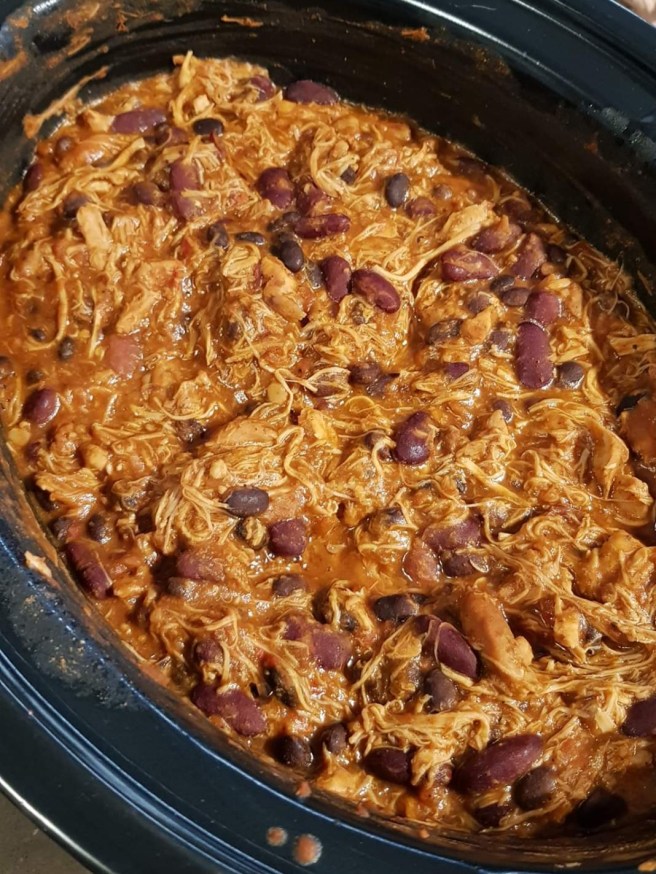
  • We cook in bulk and freeze. There are deliberate left-overs to make filling lunches and batch cooking allows the main part of the meal to be used in different ways, with very little effort on my part!
IMG_20191230_233955_494
Veggie egg cups ready for the freezer
20200223_100714
Bulk Mexican Chicken – this will portioned into the freezer and become wraps/bowls, enchiladas and tacos

Bulk bolognese gets turned into a 2nd meal of empanadas

  • We make school lunches the night before, for kids and adults alike. No exceptions. I cannot even fathom the stress of making 6 lunches in the morning whilst getting ready for school and work, getting washing on the line and starting dinner. Eek! Made the night before I have space to think about it, make sure is is varied and I sleep easier knowing is it one less job in the morning!
  • We snack plan/prep. As well as having a meal menu, we always have snack basics in the house ready to go.  It means that we can eat well with little fuss. Our go to snacks are lots of veggies and fruit then we add things like hummus, yoghurt, bliss balls, roasted almonds, hard boiled eggs, pikelets and popcorn.

So there is it.

We plan, we prepare, we eat simply, we eat variety that is heavily plant-based.

Importantly, our kids are involved with the food at all stages but we do not pressure them about food or force them to eat it. Parents decide what’s on offer, we give them opportunity to serve and explore, we model healthy eating behaviours but food is not a battle ground!

If you have made it to the end … well done! I know it seems confronting when you see it all  together. Can I encourage you if you are feeling overwhelmed to start simply. Pick one thing and go for it. Small changes really add up over time. Get your family involved and work on it together!

Good luck – I’m always here to answer questions!

J x
How we shop to manage our Itchin’ Budget

Feeding a family in this day and age is SERIOUSLY expensive 💸 😳

Living in an allergy home is even more costly – regular trips to (very expensive) allergists, dermatologists and doctors, regular updates of asthma medication, adrenaline rescue pens and stocks of antihistamines for every place they go. Creams, creams and more creams. My goodness it adds up quickly.

Then there’s the groceries ….. no options for $1 bags of pasta or flour or cheap bread. Allergy friendly options are often 8-10 times the price of standard items. And then there is the pressure of wanting to buy foods that are locally or ethically produced.

And then add in feeding multiple, LARGE, active teenage boys 😱 HOLY COW – Do they EVER stop eating?!?! 

Don’t get me wrong – I am so very grateful  that my husband has a stable job, as do I after 10 years with one income. We actually have many allergy friendly options in shops and that we are able to access the specialists we need to care well for our children. We are FAR better off than many.

I remember many years ago now (about 2011), following a friend do a challenge that was ‘Feed your family of 4 for $150 a week’ and it just made me giggle. She did it. I was so impressed. But, no way is that ever going to happen in this house. There are 6 of us and many many foods that we need to avoid or substitute. Not to mention it is over a decade later and food prices only continue to rise.

In 2018, we looked very carefully at our food budget, and I realise that, even though I wrote a menu for a fortnight and was a pretty good budgeter, I had fallen into into the trap of ‘just popping in’ to the supermarket to pick up some extra things for baking, or things we’d run out of …. and I had suddenly spent another $50 … how does that happen?!?! Eek!

I grew up watching my Mum take out the entire grocery budget in cash once a fortnight and when it ran out, that was it, we had to wait. And my Dad had literally sat me down with a pen and paper and taught me how to budget. What had happened to those lessons I’d learned?

So with 1 income (at the time), 4 kids who were expensive to feed, ever increasing costs, a husband who requested meat for lunch and dinner 6 days a week and a desire to eat well with minimally processed foods, I set myself a challenge:

Menu plan for a month, write my grocery list for a month, 1 big, careful shop and then that’s it – no going back.

Scary Stuff – but I did it AND I loved it! After a while I couldn’t actually imagine doing it any other way. Plus it was kind of amusing to watch the stares at my trolley in the shop 😆

*2024 UPDATE* Due to the ever growing size of my eating machines, I mean, children, I can no longer shop for a month at a time. I do not have the physical space in my home … when between 3 of them, they drink 3L of milk a day … no one has space to freeze 30, 3L bottles of milk 🤪 So still with the same principals, planning and menu, we have moved back to once a fortnight.

So, I’m not trying to convince all of you to shop for a month at a time – in fact, I know that some of you, (like me, in this 2024 update) don’t have the space …. I am incredibly fortunate that my Nanna gave us her old freezer for the garage, which made this process possible for us.

But the general ideas I think can work for everyone – so, after being asked about a squillion times for my tips, here is what works in our home:

  • Check what is in my pantry and freezer – write a list out – don’t be vague about it!
  • Write a menu (whether that be for a week, month or more), and use up what you already have for those meal plans. Plan to use similar ingredients for multiple meals. Take into account what else you have on in the evenings …. it’s no good planning to cook a 3 course meal if you’re only home for 20 minutes in between activities!
  • Shops in different places for different things if you are able (obviously this will be different depending on where you live).
  • Meat, milk, honey, eggs, cheese and fresh fruit and veg might come from the farmers markets. Local, cheaper and often much better quality.

20200125_144417

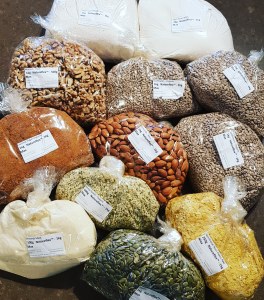
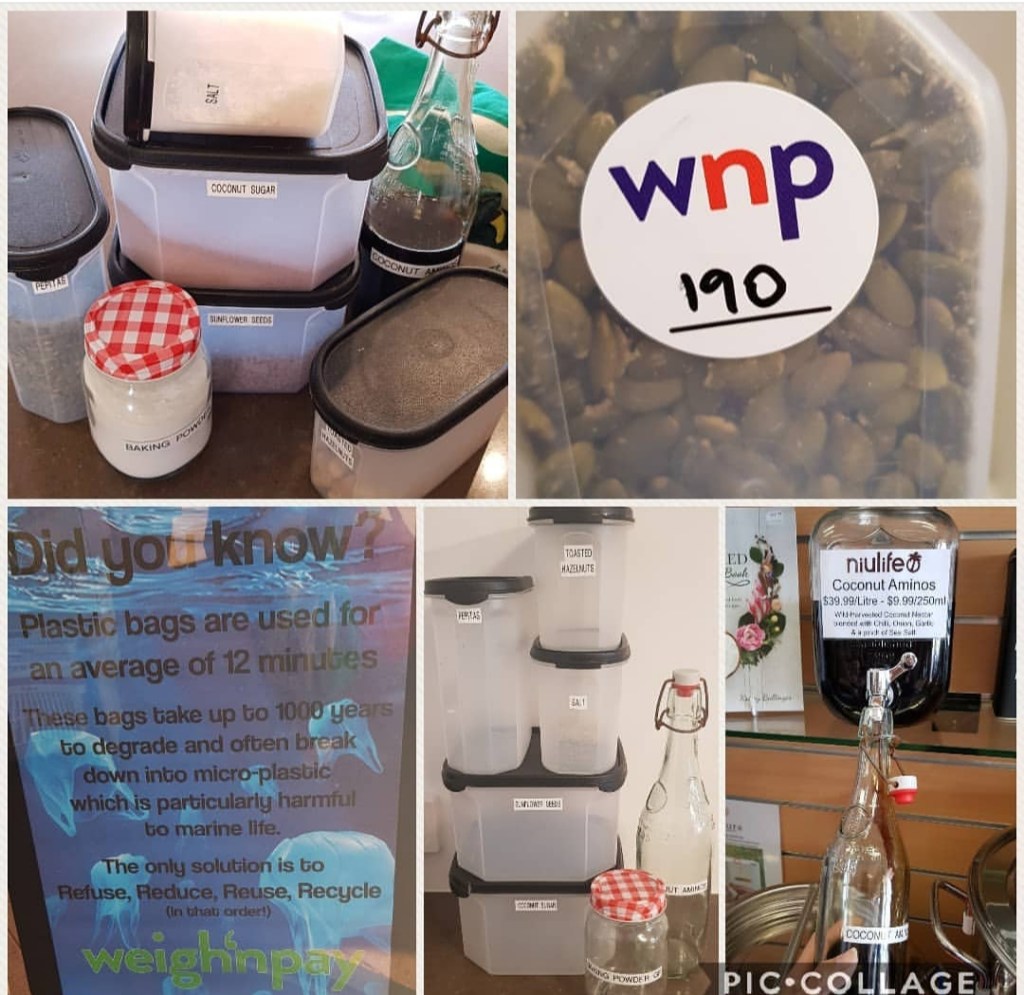
You can buy flours, nuts and seeds, salts, oil, vinegar, coconut aminos and yeast etc in bulk (my favourite online places are 2 Brothers Foods and Weigh N Pay). Or even at bulk buying places like Costco if you have access. 

20200218_062830
Don’t worry – these are all especially designed compostable bags from 2Brothers!


20200218_064011
Taking my containers to bulk buy at Weigh n Pay in Woodvale, Perth. 


Buy your packaged goods from one place (and use the rewards system to your advantage!). I currently shop mostly at Woolies. For us this includes things like tinned beans and legumes, coffee, plain cereals, frozen berries, Nuttelex, UHT milks (Oat, almond, and soy), pasta, rice, rice crackers, dried beans, dried fruit, specialist cheese, vegemite and all toiletries (this includes sanitary items, everything for washing, cleaning and use in the kitchen).

Toilet Paper is delivered by Who Give a Crap (good for your bum, the environment AND your budget!!).

Our coffee pods get delivered by Urban Brew, because they are tasty, cheaper on subscription AND compostable. We  use keep cups and almost never buy coffee out.

Admittedly, when I get the groceries home – it takes a significant amount of time to put it away, so you need to factor that in. BUT then it is done for the month (or fortnight)!!!

A note about Meat: In the past few years, my carnivore husband has realised that you can actually have delicious, filling meals without meat 😉 So we have significantly decreased the amount we eat. When we do eat meat, it is not the main focus of the meal. Instead we bulk out everything with veg, lentils and mushrooms as much as we can. It is relatively easy to get enough protein in the western world … but as a nation we’re not as great at eating enough veggies to provide enough fibre for our gut and healthy functioning …. so this way of eating meat really helps – both our guts and our budget (and the environment). And it also means we don’t need quite as much freezer space to store it all!

The things that people have told me that they ‘pop’ to the shops for are bread, milk, yoghurt and snacks for the kids:

  • Our dairy milk gets stuck in the freezer for the week. I get the new one out at night when required and it defrosts overnight in the kitchen sink. The UHT milk we buy (soy, oat and almond) is used to drink, bake and make E’s yoghurt as required.
  • And bread – I used to bake it as it was required, but I just don’t have the time now! If you’re not into baking it, or you don’t have the time (or desire!) …. just buy what you need and freeze it. 
  • Making your own snacks is SO SO much cheaper than buying them in store. Less processed, fewer additives and preservatives, less sugar and more nutrients too! Let the kids choose what kind of muffins, slices, biscuits and muesli bars they want to make with you! Freeze them ready to drop into their lunchboxes each day.
    20200218_064039
    Bake fest to fill up the freezer and pantry with snacks


Fruit  and veg are the only exception to my no-returning-to-the-shops rule.

  • I buy in bulk, blanch and freeze some things when they are on special (think green beans and cauliflower etc)
  • some things, like green peas, I just buy frozen to start with.
  • I deliberately overbuy bananas and avocados to freeze ready for baking and smoothies.
  • I try to buy the veggies I need for my meals that week so we don’t waste. I work at being creative with what we have and don’t return to market for more until we have really used all we have.
  • Don’t be afraid of frozen or tinned fruit, veg and tinned beans – they are an AWESOME, and just as nutritious alternative and SO much kinder to your budget.


20200218_064023
Waiting until it is ALL used up!!


Consider this fair warning …. If you shop like this, people tend to stare …. and they don’t even try to hide it. I’ve had all sorts of jokes and comments about the coming apocalypse and having a dozen children etc etc. Mostly I just smile – sometimes I tell people that it’s for a family of 6 and we only shop once a month … then they just look even more shocked!!

So where do we put it all? It goes in the fridge, freezer, pantry and …. the (now jokingly called) ‘Apocalypse Cupboard’ Under our kitchen bench. The store of toiletries (think tissues, detergent, tooth paste) all goes in the laundry cupboards. By the end of the month, they are all pretty empty and it makes it easy to start again.

If any of you are still reading, well done, and yes, I realise, as my husband lovingly tells me, I am a bit of a freak! I also love numbers so I broke down our expenditure and this is what I have discovered:

In 2024, it costs our family, on average, about $10.35 per day, per person to live (this has increased by about 25% over the past 8 years). I suspect 2 very large teenaged boys skew this data a bit! It works out to about $435 a week for 6 people. Not remotely close the to that 2012, $150 a week challenge 🫣 This cost is all of our food (every meal, snack and coffee), all of our toiletries, washing goods and consumables etc etc.

Some of my other ways for making our budget stretch are:

  • Cook in bulk and deliberately freeze meals
  • Plan to buy ingredients that can be used across multiple meals 
  • Again – don’t be afraid of frozen or tinned fruit, veg and tinned beans – they are an AWESOME, and just as nutritious alternative and SO much kinder to your budget.
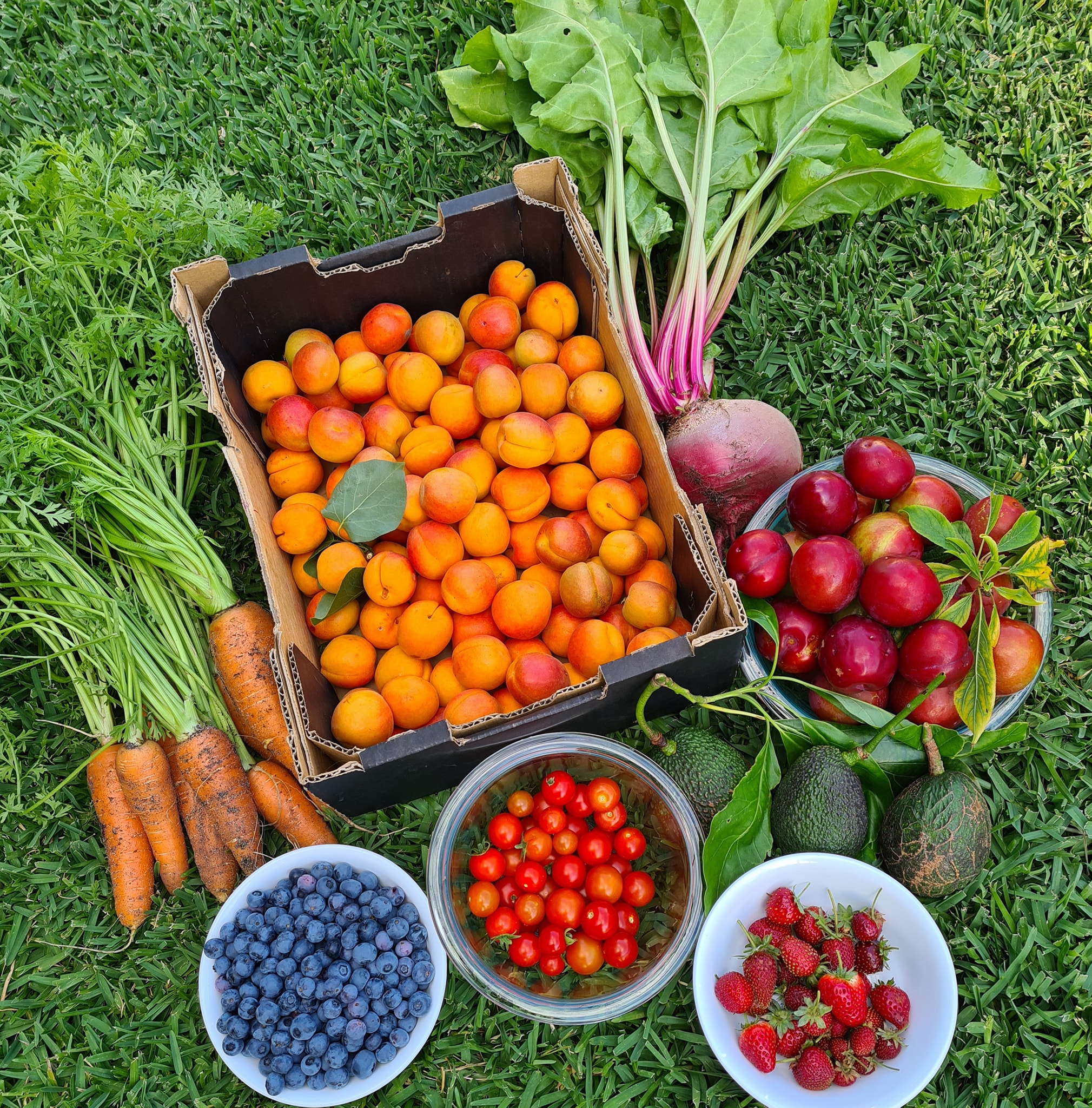
  • Try growing some of your own (even if it just some fresh herbs in pots!),
  • Don’t throw out fruit that is a bit sad – use it to made a dessert crumble or stick it in some baked goods. Veggies past their best can be turned into a soup, or collected in a freezer bag until you have enough to make stock. And,
  • Have a go arranging homegrown swaps with like-minded friends – some communities have dedicated Facebook groups for this. We have swapped propagated plants and excess veg, or homemade flavoured salts and oils for honey, eggs, lemons, chillies, garlic etc – awesome for encouraging others and building community too!

Homegrown

So – that’s how we do it in our family – I’d love to hear if you have any other tips for making your budget work!

Washing, bathing and cleaning in an Itchin’ house

Sadly, lots of kids with food allergies also have related conditions such as asthma, eczema and hayfever. We have all 3 of these in our house, which we have learned to manage fairly well.

On top of this, our Mr 3, Harry, has a very serious allergy to some cleaning products and certain chemicals. After a particularly scary reaction and a race to the emergency department just after he turned one we were given an epi-pen, which we carry at all times. However, we have since discovered that he is a super sensitive little dude and that even a visit to a recently cleaned public loo or a change in sunscreen can leave him crying in pain from the nasty burn type reaction that spreads over his body from contact.

So I wanted to share with you some of the ways that our family washes, bathes and cleans, whilst managing these allergies.

*Please keep in mind that I am NOT a doctor or dermatologist and am not suggesting that the things that work for our family WILL be the answer for yours – but we have had a long journey to work out these things and I’d love to think that it might give you a place to start if you also have an Itchin’ household that is not restricted to the Kitchen. Additionally, we are not in any way paid to endorse these products!!

My 3 beautiful reasons for changing the way we do things!

Vaccuming – Since dust mites and dust are an asthma trigger for us, and we have 3 little people and dog inside (!!), I vacuum twice a week. We have pulled up all carpet and put down bamboo and we don’t have cloth blinds/drapes to eliminate as much as we can.  Lots of vacuums just stir up dirt and blow it back out again so a really good vacuum is helpful. We installed a ducted vacuum system (which you can do yourself if you are handy, like my husband, to save big $$) which means that the pipe goes straight to the motor outside in the garage and there is no dust re-circulation. I know lots of other allergy sufferers who swear by their Dyson’s too.

Dusting – I use a damp or electrostatic cloth to avoid stirring up dust. I dust weekly to keep on top of it – we live in an area where there is still quite a bit of house construction so it gets really dusty!

Mopping – When I had a tiled floor I had a great steam mop. Loved that I could get a really clean floor without any chemicals. Sadly, steam mops are a big no no on wooden floors so I have recently purchased a Norwex microfibre mop that I use with plain water. Enjo also make a similar product and there are other less expensive versions available at the supermarket.

General cleaning – Orange oil, bi-carb soda and plain white vinegar are my new best friends. I haven’t always been a fan of this type of cleaning product but as I have tried to protect my family I have also been convicted of the need to protect our environment (and our household budget as a bonus!). I use about 10 drops of orange oil in water mixed in a spray bottle to clean the bathrooms, toilets and showers. As opposed to tougher chemical cleaners, you do need to do this more frequently because it isn’t as good at cleaning up a scary build up of mould and grime, but if you keep on top of it weekly, it works well. Bi- carb and warm water is a great cleaner for most things, use it as a paste if you need more of a cream type scrub or mix with a small amount of vinegar if you want a fizzing clean. Works for cleaning kids bath toys, un-blocking drains, and de-scaling your iron and kettle. It also works for getting smells (like pet wee or vomit) out of carpets . I do have to confess that I still use a bit of bleach on the inside of my toilet bowl – it is away from contact with Harry and those ingrained ideas about germs are very hard for me to completely ignore 😉 I use white vinegar in my dishwasher as my standard rinse aid and if I run out of the dishwasher detergent I use a heaped tsp of bi-carb and 3 drops of orange oil – works beautifully!

Two of my best cleaning friends

Washing clothes and nappies – My favourite washing detergent is called ‘Rockin Green’. I haven’t found it in a supermarket yet but it is easy to order on line with a Google search. It is totally phosphate free and also free of enzymes and optical brighteners. It is particularly amazing if, as we do, you wash cloth nappies. If I don’t have the Rockin Green, I use a standard sensitive washing powder, but I use only about 1/3 of the amount specified on the pack and often do and extra rinse too. As a pre wash for cloth nappies, a teaspoon of bi carb is amazing. I also sprinkle a tsp of bi-carb into the bottom of the nappy bucket to help absorb the smells.

3-Blog 063

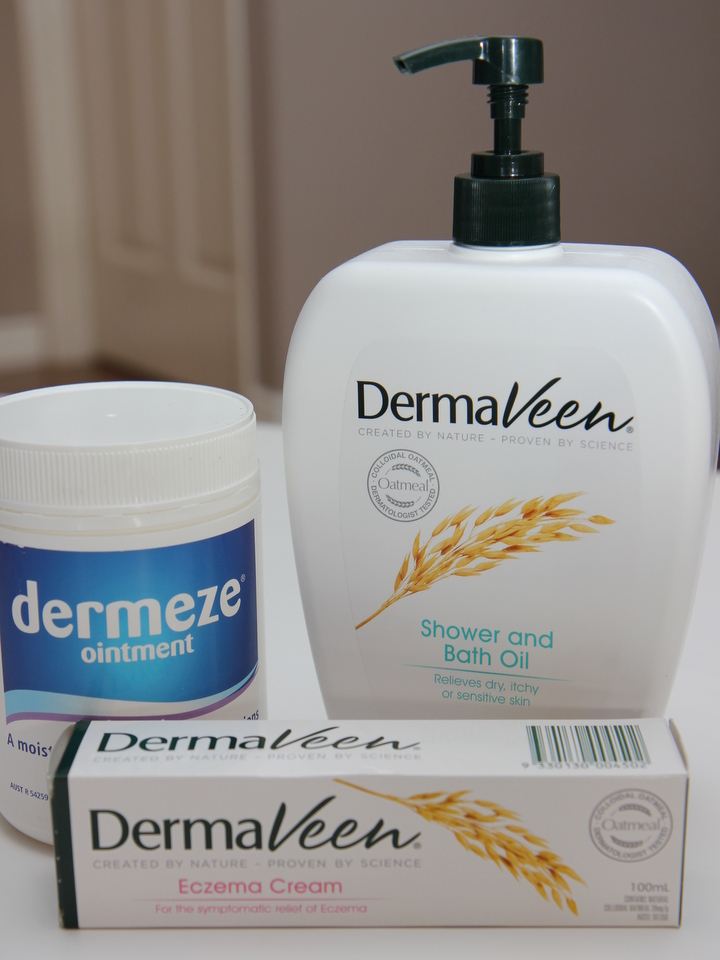
Bathing – Any kind of detergent is out for Harry, so we bath the kids nightly in warm water and a few tablespoons of Dermaveen Oatmeal Bath and Shower oil. If they are out at another house it is just plain water and a face-washer. A couple of drops of food colouring in the bath turns it a great colour if you want to make it more interesting. The oatmeal oil is beautiful and moisturizing and it is lanolin, paraben and fragrance free.  Because I am in so much contact with the kids, I also use this to wash myself.

Skin care after baths – To keep on top of the rashes and scaly skin we need to make sure the kids are very regularly moisturized. We use Dermeze Ointment. It is a soft white paraffin and quite thick, but it works wonders for sore and sensitive little bodies. We also use organic rose-hip oil on sore spots if they’re not bad enough to require the really strong medicated creams we also have. Dermaveen also make a nice thick eczema cream that is lovely and relieving and not as greasy if you aren’t so dry or itchy.

Bath time and after bath skin care

Nappy Rash – This has been a big difficulty for Ellie as well as Harry, so after lost of bleeding bottoms (after only 1 acidic nappy) and doctors visits, we seem to have a routine that clears it up fairly quickly. We avoid commercial wipes and use warm water mixed with a tsp of bi-carb and wipe with a soft, chemical free, make up pad.  Then when it is particularly bad, we use Hyrdozole cream (from your Pharmacist, it is a anti-fungal mixed with a cortisone) and then after a few minutes, use a very thick layer of Nappy Mate paste over the top (this was developed at the Children’s hospital in Perth for kids who were admitted to hospital with Nappy Rash, and is very thick and can be quite tricky to apply but it is by far the best healing barrier cream I have ever come across). Also let those bottoms air as much as you can … fresh air and a bit of sunshine works wonders!

I realize that all written down in one place, this looks like a lot to change – but be assured, we have done this gradually and it’s now just second nature.

Keeping your kids safe and well is always a big challenge – Good Luck and please let us know if you have any other tips for managing these things in your Itchin’ house.

Tips for having a successful weekend away

“How many sleeps Mum?!”

We fielded that question for at least 10 days – the kids were super excited about our weekend away in the country, and so was I. There was some trepidation on my behalf though – having kids with allergies makes travelling quite a bit harder and requires some forward planning – but I think my preparation made our weekend a great (and allergy safe) one.

Before you go:

– think about where you are going and staying –

  • What type of accommodation are you booking? I think self-contained is a great idea for families with food allergies. It doesn’t give the cook as much of a holiday but it certainly reduces the risk.
  • Is there a hospital in the vicinity? This is something to think about if you are dealing with anaphylaxis. We had a district hospital nearby and I knew we were only a short air-lift to Perth.
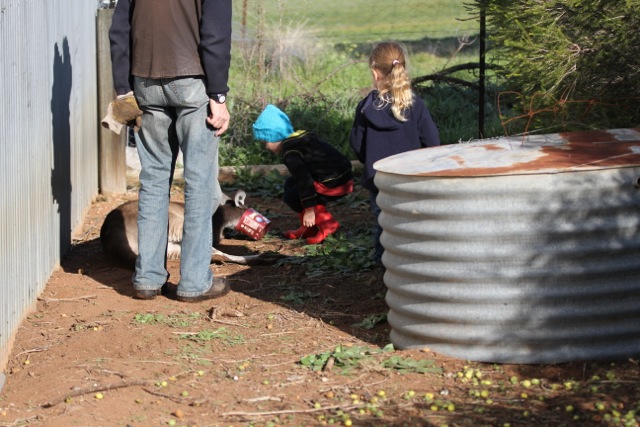
  • What activities will you do that could be risky? We were staying at a farm where we would be feeding animals – I made sure I remembered to ask the farmer when we arrived if there were nut products in the feed – there was, so we were able to help our kids adjust to the fact that they coudn’t feed certain animals and the farmer was fabulous too – he let our kids feed the other animals so they didn’t miss out.

farm3
Feeding Katie the Kangaroo

– plan your meals –

  • Dinner – I planned our menu for the weekend and froze two dinners/partial dinners from our meals in the week so that I didn’t have to cook much while away. We had soup and rolls the first night – all I had to do was reheat the soup and put the rolls in the oven for 5mins. The second night I used the leftover taco mince I had frozen in a pasta bake – so I cooked pasta and added some grated carrot, cooked broccoli (just throw it in the pot of boiling pasta 5min before it is finished) and then I took Jemima’s portion out before sprinkling cheese on top and baking in the oven.

    IMG_0335
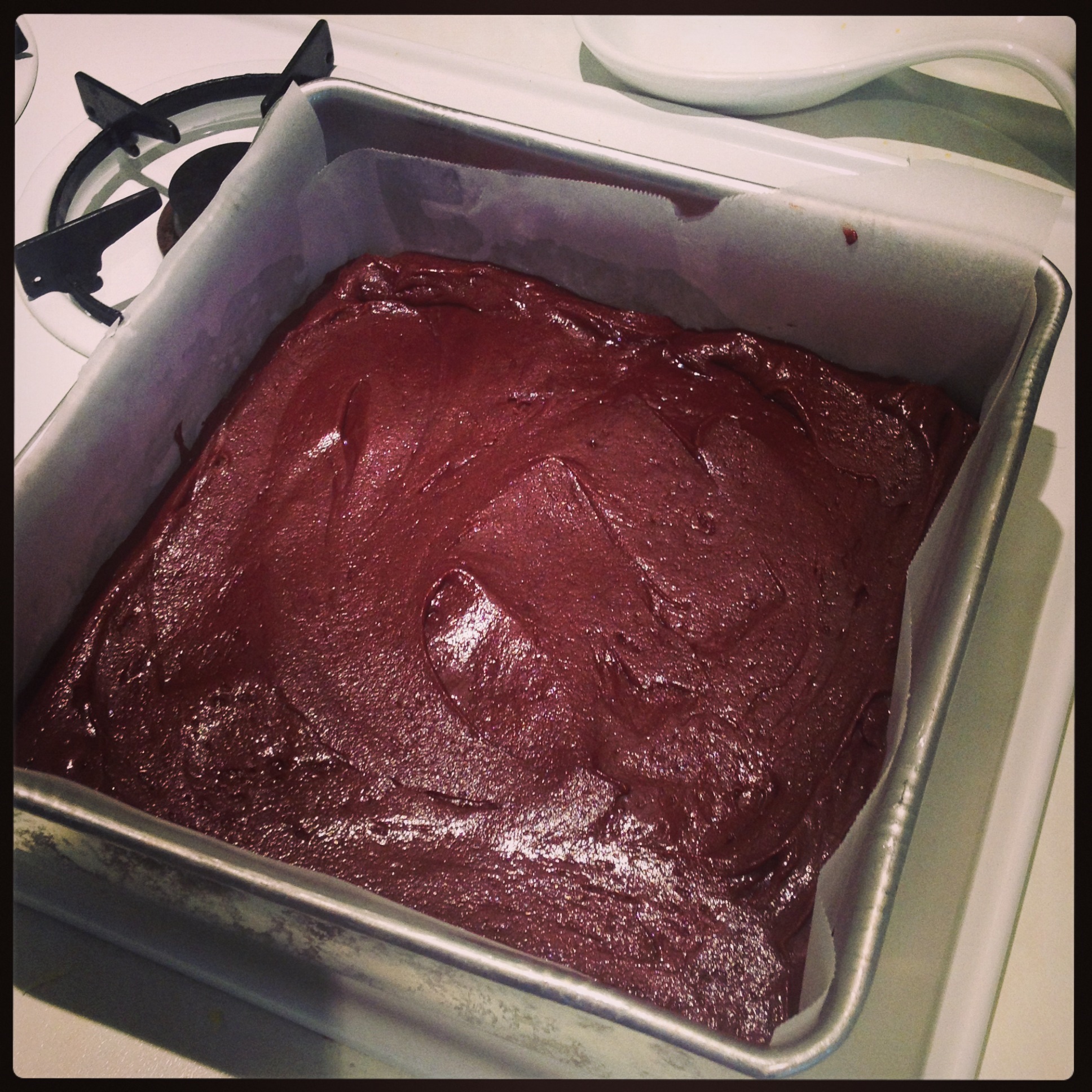
    Ready to bake my Vegan Chocolate Fudge Cake – thanks to RetroMummy
  • Snacks – I brought fruit and dip and crackers (as well as baby snacks)  but I also baked a cake for us to have as a treat (see here for the recipe). Very exciting for the kids!
  • Lunch – we planned to have bakery lunches as we knew there was a bakery in the town. Those who could had pies and Jemima had hot chips as the bakery wasn’t as well stocked as we had hoped. Very thankful for the humble hot chip! The one thing that could have gone wrong was that the pie Cohen chose didn’t end up being the one he got (the lady picked up the wrong one) but we didn’t notice until he was a few bites in. That made us very thankful that there hadn’t been a satay pie or something and that we will need to be more careful next time!
  • Breakfast – we had special “holiday” cereals that we don’t normally allow at home. 2 days of Coco Pops and Nutrigrain was super exciting for the kids and easy for me. Emmalyn was very happy with her Weetbix still especially with the view of the alpacas out the breakfast window.

farm4
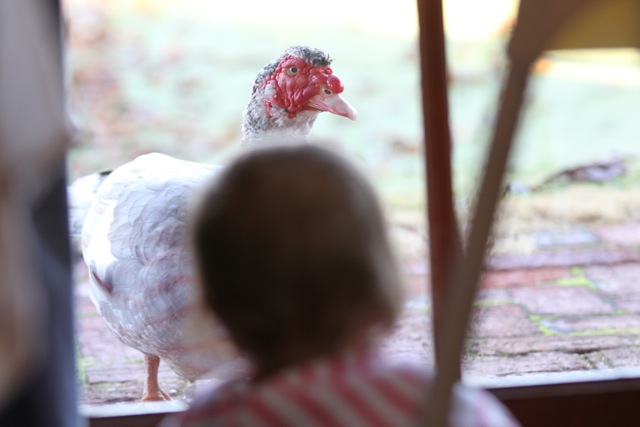
Saying hello to the duck who was after our breakfast!

– Make a list

  • My Mum always wrote packing lists so that’s what I do too. I write it a couple of nights before so that it’s in the back of my head and I am less likely to forget something come packing night.
  • Don’t forget your medications. As well as our regular emergency bag (epipens, asthma prevention meds and ventolin), I make up a little first aid kit including Panadol, Nurofen, Redipred (that’s a prescription one so only if you need it), our extra epipen, bandaids and Paraderm Plus (an antiseptic, anaesthetic and anti-itch cream – covers lots of bases).

    farm2
    Out collecting rocks and feathers

While you are there:

– Activities

IMG_0337
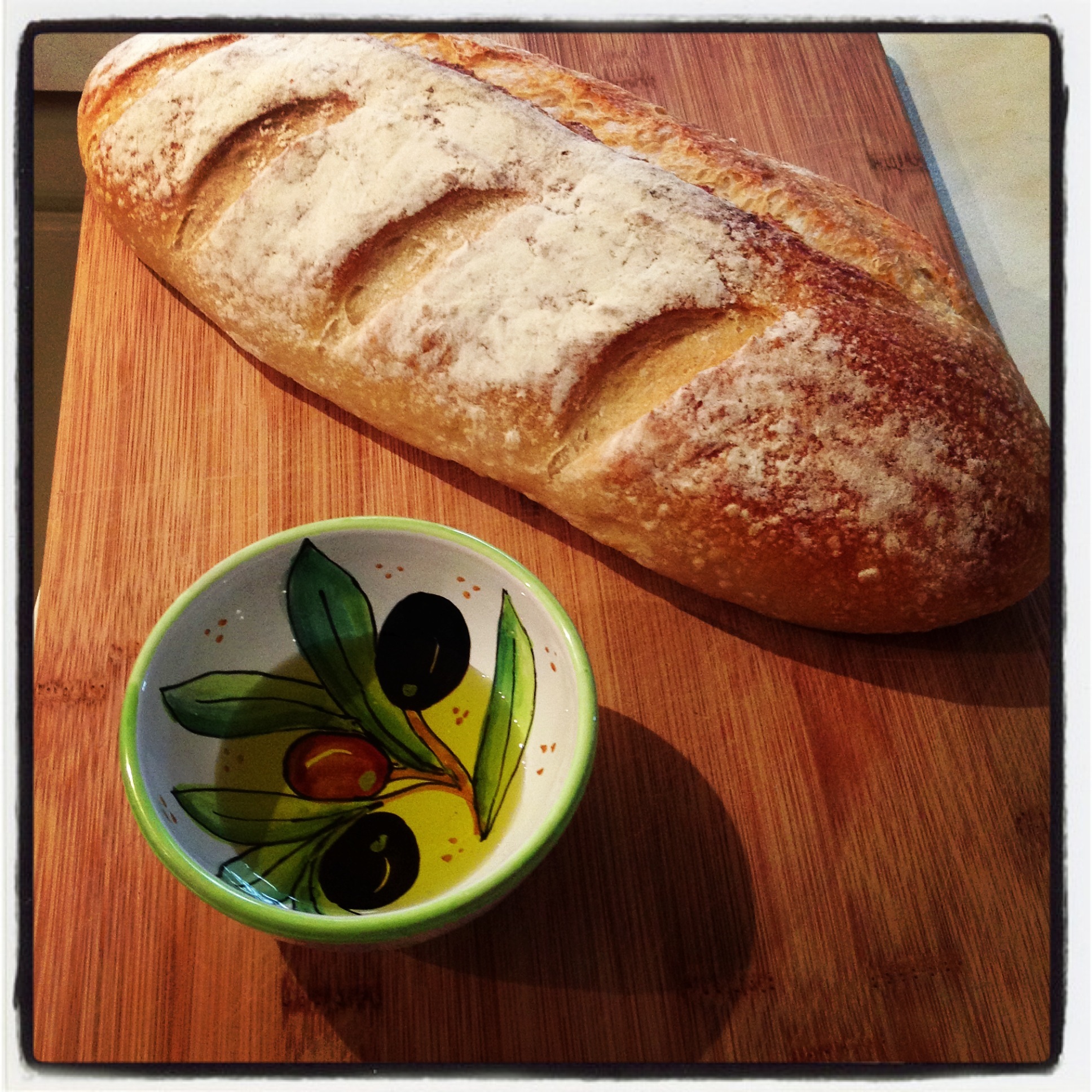
Fresh sour dough with lemon infused olive oil

  • With little kids, not doing much driving is the best choice for us so we enjoyed being a walk into town (that option had made the accommodation very appealing) and spent time exploring the farm, feeding the animals, playing in their playground and made one drive out to an olive oil company for a parents’ choice activity – yum!
  • We continued with our regular rest routine as Emmalyn needed to sleep anyway and the kids (and us!)love their downtime.
  • We enjoyed not having anything else to do and having my husband around without work needing to be done was great.
  • We brought a couple of toys each as we planned to be outside most of the time. The best one for the older two was Jemima’s Lego briefcase with a couple of extras. How great is Lego?!

We had such a wonderful weekend away – hoping we can do it again soon!

Menu Planning and Keeping my sanity!

Several times in the last 4.5 years on our food allergy journey I have made mistakes or oversights that have led to my kids having reactions … and trust me – it feels awful 😦

So I wanted to share with you some of our tips for how we cope in our home in the hope that it might help you too.

Menu

  • Have lots of safe snacks on stand by. Individually wrapped and frozen slices, muffins and breads are really handy. I always have some fruit or rice crackers in my nappy bag so I can feed Ellie if we get caught out somewhere for longer than I had expected.
  • We all eat the same thing at meal time as much as possible to avoid cross contamination (and it’s easier for me!)
  • We all use Nuttelex instead of butter or margarine so that there aren’t any remnants in spread jars.
  • Different face-washers each day for Ellie and the boys so that we’re not wiping allergens on her if the boys have been eating them.
  • Will’s allergy to most nuts is potentially life threatening so, as a blanket rule they are not allowed in the house, and Harry isn’t allowed to eat them when he’s out because he’s in such close contact with Will (we may need to rethink how we deal with this one as they get older).
  • Always check labels on packaged foods – ingredients change, even between versions of the same brand (eg plain or grain packet bread mix). I recently made the mistake of buying a home brand version of a cereal that is normally fine for Will only to have him break out in hives after eating only a tbsp. Turns out the home brand version had vitamin A extracted from peanuts in it!
  • I don’t love doing dishes so I try not to use 2 lots of utensils when cooking, so if we aren’t eating exactly the same thing, I tend to do Ellie’s first. Eg, drain the GF pasta first then use the same drainer for the regular pasta afterwards, or cut Ellie’s bread on the bread board and then when hers is on the plate, do the regular bread next.
  • Baking paper in the sandwich press is easily switched so that there’s no contamination from crumbs or cheese etc.
  • Make sure faces and hands are washed after meals and snacks and before kids play with toys.
  • Lastly we talk to our kids regularly about allergies. The boys are 2 and 4 and they know to always ask about nuts and eggs before they eat food from anyone else. Fortunately (in some ways) Ellie’s reaction to some things are quite instant so they have seen the welts pop up when they kiss her after drinking milk etc. And they know not to feed her anything unless they’ve checked with me – and even tell their little friends when we are out and about.

Do you have any other allergy survival tips to share?

What’s in my kitchen?

This post is to help give you an idea of the kinds of things you might need/want in your kitchen if you are a family with multiple food allergies who is looking for what you CAN eat!

(Update: As our kids are getting older and we have fewer allergies to contend with, this is still how we eat to fill them up and meet our nutrition needs)

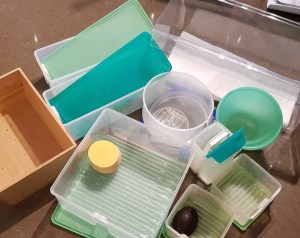
After a horrible mouse plague when we lived in the desert (we’d sometimes kill more than 20 in a night inside!!), everything needed to be airtight so we have A LOT of Tupperware. You can check out my fridge and pantry in more detail out below:

20200216_125731

20200125_144417

IN THE FRIDGE we have:

Nuttelex: We use Nuttlelex (a vegan butter) for the dairy free option, especially in baking. A separate knife is always used in this.

Butter: Plain butter for the non dairy free.

Milks: Full cream cows milk for 3 of our family, lactose free UHT for one, another drinks UHT oat milk and I whilst I don’t really enjoy any kind of milk, I use high protein almond milk in smoothies. We also use soy milk in baking. It’s quite the selection!

Yoghurts: I don’t make our dairy yoghurt any more (it is a time issue) but we buy a natural, high protein greek yoghurt. This is the best at filling the kids and is the most flexible for us to flavour and sweeten in the different ways we prefer. E’s yoghurt is always homemade soy. Both recipes are here.

Eggs: 5 of the 6 of us can eat eggs now (YAY!).

Cheese: Dairy Cheese and Bio Cheese. I buy 1kg blocks of the fairy cheese and grate in my food processor to save money. Pre-sliced cheese also helpful for a little portion distribution when teens make their own food!!

Medjool dates: I buy them in bulk as they are the base for many of things we make.

Dips and spreads: Cream Cheese (soy and dairy), sunflower seed butter & hummus,

Herbs/Spices: minced garlic, ginger and chilli, coconut aminos, thai chilli paste, lemongrass (when our garden allows)

Extras: Tahini for making hummus, lemon juice, maple syrup and a constant supply of hemp seeds. There is always a container of bliss balls on the go too.

We always have loads of in season fruit and vegetables on hand for easy snacks.

IN THE FREEZER we have:

I am lucky enough to have a big freezer. It is split into 6 labelled drawers (Yup, I’m a massive nerd!).

Drawer 1: Loaves of sliced light rye bread, wraps (usually whole grain, seeded or high protein), wholemeal pizza bases.

Drawer 2: Baked goods like scrolls, pizzas and, portioned cakes, pikelets or muffins. These are cut and frozen in ziplock bags, to pull out easily for making lunch boxes each night.

Drawer 3: Meat. I buy for a month at a time based on our menu and portion it out and label it before freezing.

Drawer 4: Pre-made meals. I cook in bulk and freeze the additional portions. Also here I have homemade gravies (in reusable squeeze pouches), jars of salsa, apple sauce and ice cubes of aquafaba (for replacing eggs in baked goods).

Drawer 5: Frozen fruits & herbs. Peeled, overripe bananas, peeled and seeded avocados, mangoes, berries, and extra herbs from my garden.

Drawer 6: Frozen Veg – always a BIG bag of mixed frozen veg, plus peas, corn, spinach (I freeze half the bag if I buy it fresh), green beans etc.

We have an additional freezer in our garage (yes – VERY lucky!) that we use to buy and store extra loaves of bread and bottles of milk – this saves us making unnecessary trips back to the shop. Also portioned meat if we happen to find a very good sale.

IN THE PANTRY we have:

Flours: A few different kinds but we largely use spelt, a 50% of white/wholemeal self raising or a store bought GF mix. 20151023_212005

Sweeteners: Honey, golden syrup, rice malt syrup, raw sugar, also icing sugar for cakes. I used to use coconut sugar a lot as I liked the caramel taste, but to save cost, we no longer use it.

Carbohydrates: We use mostly mix of GF pasta & spaghetti, including lentil and veggie based pasta. Also brown rice, quinoa, corn couscous and sometimes arborio rice for risotto.

No egg: a powdered egg replacer made by Orgran

Cereals: We make porridge or overnight oats made with plain rolled oats, but we also make our own muesli (with a mix of seeds and dried fruits) or granola and have some allergy friendly cereals like puffed rice, cornflakes and oat bran flakes. GF weetbix is a massive favourite (we’re desperate for a bigger sized box!) … and occasionally, when it is half  price, the generic version of Nutrigrain (that is a new addition with teenage boys 🤨).

Condiments etc: salt and pepper, dried herbs and spices (galore!), tomato, bbq, (homemade) sweet chilli sauce and coconut aminos. We use balsamic, red wine, white and apple cider vinegars, Massel stock powder (chicken and beef style). The oil we use is mostly extra virgin olive oil. We love the lemon, garlic and chilli flavoured olive oil to add a flavour boost. I make my own Mexican Spice mix and French Onion Soup mix. Nutritional yeast features heavily too.

Spreads: Honey (we are very lucky to get most of our honey from my mother in law’s hives), vegemite (in the biggest vat we can find!) and of course there is always a huge jar of Sunflower Seed Butter. We also like to make almond and walnut butter.

Dried fruits: Sultanas, apricots and prunes are the staples. Dried mango when it is on sale, and occasionally dried apple.

For baking: GF baking powder, bi-carb, glucose syrup, vanilla bean paste, cocoa/cacao, cinnamon, ginger and other fragrant spices.

Seeds and nuts: Our regular stock is: sunflower seeds, hemp seeds, pumpkin seeds, flax seeds and chia seeds. Raw and dry roasted almonds, dried chick peas or dried broad beans. A dried soup mix that I make by mixing red and french lentils, yellow and green split peas and barley. We also have white and black dried beans ready to soak. The nuts we can have in our house are almonds, walnuts and pine nuts. Macadamias are also safe .. but who can afford those 🤣

Crackers and biscuits: Multi-grain rice/quinoa squares, and wholegrain sa-ka-ta rice crackers. Biscuits are normally homemade but we keep a backup packet of allergy friendly ginger nuts as a back up too.

Tins: Beans and legumes – allll of the beans, coconut cream, baked beans. Crushed tomatoes, tomato paste and passata. Tins of salmon, flavoured to add to lunches and plain for recipes. Tinned fruit (in juice rather than syrup), especially pineapple and stone fruits like peaches or apricots that are often too expensive in their fresh form.

Snacks and special items: Organ makes a good custard powder. Mini marshmallows or Sweet William chocolate or choc chips, also ‘Free From’ Cake mix sometimes on standby. Popcorn kernels – so cheap and easy!! Packaged items like choc covered chickpeas (from the Happy Snack company) and Harvest Snaps peas (Calbee) and roasted edamame (The Only Bean company), and sometimes banana chips.

If it is available and our budget allows, I buy Australian grown/made when possible. I admit that this is getting harder and harder with the rapidly increasing cost of living.